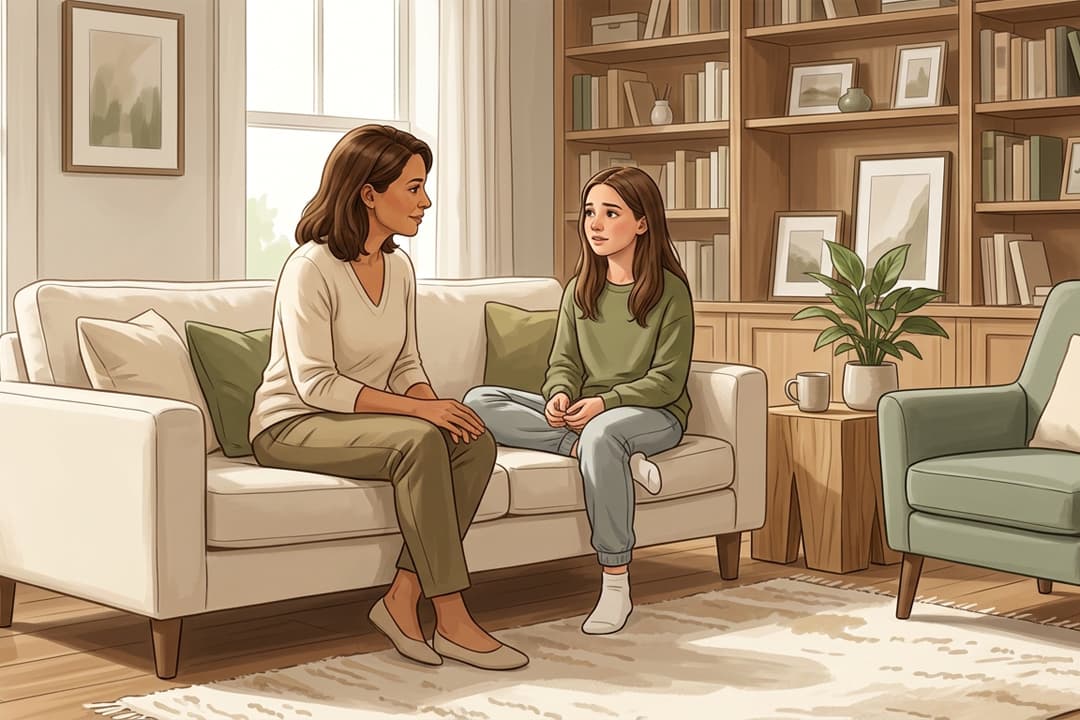
The word "therapy" can land differently depending on how it's brought up. Said the wrong way, mid-argument, as an ultimatum, it can sound like punishment. Said the right way, it can sound like an offer. Finding therapy for teens in Ontario is often the easier part of this process; the harder part is getting your teenager to actually want to go. This guide walks through how to open that conversation without it turning into a standoff, what to watch for beforehand, and where parenting support fits into all of it when the process feels bigger than you expected.
What "Starting Therapy" Actually Means to a Teenager
For a lot of teens, "you need therapy" sounds like "something is wrong with you." That reaction makes sense given how the word still gets used, sometimes as a joke, sometimes as a threat, in everyday conversation.
Reframing it early matters. Therapy isn't a verdict on their character; it's simply a space where someone's own concerns can be worked through without judgment from a parent, teacher, or friend group.
Signs It Might Be Time to Bring It Up
Some signs are loud. Others are easy to miss, especially in a teenager who's naturally more withdrawn or private to begin with.
Common signals worth noticing:
- Sleep or appetite changes that have lasted more than a couple of weeks
- Withdrawing from friends or activities they used to care about
- A noticeable drop in grades with no clear cause
- Increased irritability or emotional outbursts that feel out of character
- Reviewing anxiety signs and symptoms together as a family can help clarify whether what you're seeing fits a pattern worth addressing
How to Open the Conversation
Timing matters more than wording. A calm car ride or a quiet evening tends to work better than right after a fight or a bad report card.
A few approaches that tend to land better than others:
- Lead with observation, not accusation ("I've noticed you seem more tired lately")
- Frame therapy as a resource, not a consequence
- Ask what they think, rather than announcing a decision
- Offer to look at options together instead of picking one for them
What Not to Say (and What Works Better)
Certain phrases shut the conversation down fast, even when they're said with good intentions.
| Instead of Saying | Try Saying |
|---|---|
| "You need help." | "I think talking to someone could really help." |
| "Everyone thinks something's wrong with you." | "I've noticed a few things, and I want to check in." |
| "You're going, no arguments." | "Let's figure out what feels manageable to try." |
| "This is for your own good." | "I want you to have support, not just from me." |
When Something Deeper Might Be Going On
Sometimes what looks like typical teenage moodiness is actually tied to something more specific, an event, a loss, or an ongoing stressor the teen hasn't found words for yet.
If a specific incident or ongoing experience seems connected to what you're noticing, trauma therapy in Ontario is worth asking about directly when you're exploring providers, since it requires a different approach than general counselling.
What Therapy Actually Looks Like for a Teen
A lot of teen resistance comes from not knowing what a session actually involves. Clearing that up ahead of time can lower the anxiety around the unknown.
Individual psychotherapy for youth typically starts with building trust and rapport before diving into anything specific. Sessions are private, age-appropriate, and paced according to what the teen is ready to talk about, not a fixed script.
When the Whole Family Needs to Be Involved
Sometimes the teen isn't the only one who needs support, especially when the issue is tied to something happening at home rather than something isolated to the individual.
Family psychotherapy can help when communication has broken down across the household, not just between parent and teen. It creates a space where everyone gets heard, rather than one person being positioned as "the problem."
If You're Navigating Your Own Struggles Too
Parenting a teen through a hard stretch is exhausting, and it's easy to put your own well-being last while focused entirely on theirs.
Individual psychotherapy for adults can help parents process their own stress, guilt, or uncertainty about how to handle the situation, which often makes the parent-teen conversations calmer and more effective as a result.
When It's a Relationship Strain, Not Just a Teen Issue
A teen's struggles can sometimes surface, or worsen, tension between parents that was already simmering underneath daily life.
Couples psychotherapy is worth considering when disagreements about parenting approach, discipline, or how to handle the situation are creating friction between partners on top of everything else already going on.
Where to Find Support in Ontario
Not every practice works specifically with teenagers, so it's worth confirming a provider's experience with adolescents before booking a first session.
Healing Meadows Counselling offers therapy for teens in Ontario alongside broader parenting support, so families aren't left piecing together separate providers for what's really one connected situation.
Conclusion
There's no perfect script for this conversation, but there is a better way to start it: calm, specific, and framed as an offer rather than a demand. Most teens aren't rejecting therapy itself; they're reacting to how it's presented.
Healing Meadows Counselling can help you figure out the right approach for your teen and for your family as a whole.
FAQ
Frequently Asked Questions
Approach the conversation calmly, frame therapy as support rather than punishment, and involve your teen in choosing a provider rather than presenting it as a decision already made.